Sunday, December 11, 2011

Siento el Ritmo de la Granja, de la Vida

Rachael, our cheese expert, preparing chives during harvest.


Last night I found myself sitting around a table with a group of 10, a single candle lighting the room, eating pizza after pizza and chocolate cake from our woodfire oven, drinking homebrewed beer and ginger ale almost till the dawn. Laughing, conversing (multilingual), singing everything from "Shady Grove" to Chango Spasiuk. There´s a guitar, harmonicas, clapping, stomping, and pounding on the table. We're a tight knit group from many different places, and many different backgrounds. ¡Que buena onda!

Daily, I am pinching myself. Moments like this really stick with you- and I´ve had so many already. I keep catching myself wondering "how in the heck did I wind up in this situation"? Take it from me, grass-roots traveling is the way to go! There´s got to be no better way to soak up the culture of a place. And what a culture this place has! The art, music, and community I´m finding here is so rich! Three months here are going to fly by.

Life on the farm is very rythmic. There is always so much to be done, yet it never becomes stressful. We do what we can, we apply ourselves and work hard. But we never over-work. The farm community generates an inertia which carries all of us on. Some daily tasks are recurring, but no two days are alike. The seasons progress, the crops grow. We work, and we enjoy the fruits, veggies, cheeses, beers, and breads of our labor. It´s a vital, tangible, and satisfying existance.

Un Dia Tipico:

We wake up just before the sun peaks over the eastern crest of our valley, about 8 am. The mornings are cold and damp. In a jacket and beanie I make the quarter mile hike from my log cabin to the community kitchen. On the way I fill the water basin for los gansos (geese), and top of the chicken feed, water, and whey at the hen house. The first person the the kitchen prepares breakfast, usually oatmeal, bread, or flatbreads. We eat, share a round of maté, and discuss our plans and goals for the day. Every monday we start by taking an hour or two to stroll through the granja, noting the state of all the crops, and making a to-do list for the week. Once the list is made, each of us can do whatever job we´d like whenever we´d like to do it. Alex really makes a point of involving us in the short and long term planning for the farm, creating a sense of ownership in the farm and it´s community. We´ve all traveled and worked quite extensively and each of us has a unique perspective to offer. There´s a lot of idea sharing, experiementation, and a lot of learning that happens as a result.

We start work at 9 and go about our tasks untill 1. Lunch and dinner are prepared for the group by one of us on a rotating basis. With anywhere between 5 and 8 people working any given day, you end up cooking a meal every third day or so. Food depends largely on whats available from the garden, if there are extra eggs, a batch of cheese that for one reason or another we won´t give out to the Associativa, ect. Beans and rice are staples. There are a lot of stews, veggie stirfrys, and polenta casseroles. Several of the weeds commonly seen in the granja are actually great for salads. There are wild turnips, lambsquarter (sp?), and something else... I can´t remember it´s name. Its leaves are very tender and have a lemony flavor. I´ve cooked 3 times so far. The first turned out asi asi (it´s a mud hut with a wood fire and camping stove, gimmie a break!), the second two though- muy bueno, if I may say myself! Butter is sparse though, which makes it a challenge for me... some of ya´ll know what I´m talking about.

After we eat we siesta till 5. Thats 4 free hours in the middle of the day, EVERY DAY! I go for short hikes, play guitar with Jeremy or John, go for a swim, read, do yoga by the river, whatever I feel like that day.

At 5 we resume working, and eat dinner shortly after sunset at 8. I love our free rein, task focused work method. I like to finish what I start, and this structure gives me the ability to either indulge that, or change gears and work on something different if a task isn´t jiving. Some tasks I´ve been involved with are caring for the gallinas, weeding and tranplanting in the garden, seeding in almasigos, I helped seed trigo sareceno with the horse drawn plow, construction of the greenhouse (so far that´s involved cement and rebar work, and some basic carpentry), making a lemon rose-hip champagne for our Christmas boxes, and of course harvest! We harvest every wednesday and send our boxes to all the families in the Associativa. This week´s boxes had lettuce, kale, chard, chives, radishes, turnips, parsley, eggs, strawberries, mountain spinach, an herb boque, and the member´s choice of jam, chutney, salsa, cheese, or beer.

We eat dinner at 8, and kick around in the kitchen socializing by candelight till 9:30 or 10, when people start retiring for the evening.

Wow, another novel. I wonder how many of you made it through, haha!

Hasta luego, salud y felicidad!
The new invernadero, in construction

A better angle of the farm... maybe. Still searching for the right spot to capture the feel of the valley.

Queso de vaca.

Freshly transplanted tomato plants. I did 60 plants on one of our hottest days and didn´t lose a single one!

The group playing totem. Ask me to teach you at home, its way fun! From front clockwise to back- Jeremy, Jillian, Partick, Jenna, Alex, y Sebastion.

Bottling the champagne! Mariano eating a lemon in back is a fantastic musician.
A weeded and mulched bed on the right, compared with an unweeded bed on the left. We weed, trim the flowers, and mulch the bed with what we pulled up. This inhibits regrowth and acts as a green manure! Pretty darn clever.

Saturday, December 3, 2011

El camino a Valle Pintado

A photo I took from the trail on the way  to town.

Hola Amigos! It´s my first entry from the south! Pardon me if it seems rushed and disorganized. It is! By the way these computers have no spell check... just sayin'. The trek to El Bolsòn is quite a bit longer than I had anticipated. It´s only 3 km to town as the crow flies, but you must climb over a mountian. I´ve got a limited amount of time before the internet cafe closes, but I´ll convey what I can.

I´ve been at my farm since wI had a few canceled flights due to volcanic ash. Got stranded for a night in Houston, and was rerouted through Miami. Two and a half days after I left California I landed in a hot and humid Buenos Aires. I got there a day late, so I could only spend one night in the city. Lucho, my couch surfing host helped me make the most of it. We took the train from Belgrano, the neighborhood where Lucho lives, to Retiro. From there we meandered back through the city and the parks near the sea. There were art and craft markets, drum circles, and bands playing in several of the parks. It happened to be an Argentine holiday, so the streets were packed with people- an enormous block party! We ate empanadas under the raining trees in Plaza San Martin. The air was so saturated with moisture that it would condense and drop off the leaves. At night we were joined by some German travelers, aslo couch surfing with Lucho. We took the train to Plaza de La Republica, were we saw the Argentine capital and walked across the widest street in the world. From the we headed to San Telmo, BA´s old downtown, for a night of Tengo clubs and bar hopping.

In the morning I caught a bus that would take me to San Carlos De Bariloche, a 22 hour trip. All day we drove across the pampas, a sparely populated flatlands across the center of Argentina. As night started to fall you could see thousands of fireflies stiring thick grassy air of the plains, a living reflection of the night sky above. By day break we were in a mountainous desert. Jagged snow capped peaks could be glimpsed in the distance. I arrived Bariloche before noon and took the bus into town. A fellow traveler told me about a mountain climb trail that was a few km walk from the city center. I befriended a group Argentines at the top, and we shared a round of maté, the local drink of choice.

Wednesday morning I was on another bus to El Bolsón. A cab ride ride and a short hike later I was in Valle Pintado, on the banks of the Rio Azul. I hiked upstream through a pasture spotted with wild rosebushes until I finally spotted signs for the granja. After almost a week of touch and go traveling, I´d made it!

The farm sits on the easter bank of the Rio Azul, in the green and narrow Valle Pintado (Painted Valley). The glacier melt river is born roughly 20 km upstream- a long day´s hike from here. I will do it some time. To our east and west, forested valley walls rise steeply. El Bolsòn, a town of around 20,000 is just over the ridge to the east, while the western side of the valley rises all the way up to snow capped peaks of the Andes. The peaks aren´t visible from our farm, but climbing up the eastern side of the valley one can see they are quite near. On the floor we are at only 200 meters elevation. The air is warm and pungent. I´m told that all of the wildflowers came into bloom a few days before I arrived! My first few days here were in the 80s-90s F, almost warm enough to swim in the icy, icy river (I got in up to my waist, haha). The water is running swift and high. There are many deep, vibrant tourquoiz pools teaming with fish! We don´t have fishing poles here, but I think I will try my luck with a stick and line.

The farm is run by a guy named Alex. He´s a stand up dude! Alex was born to American parents in Indonesia, where he lived until he was 18. He went to school in the US near Philadelphia where he created a customized major composed of courses in sociology, environmental sciences, anthropology, and comperative theology. At 21 he and his brother bought the land where the granja now sits. He has been here farming it ever since. He´s now 29. Alex wakes, works, and grubs with all of us, and is a bountiful rescource or all things farm and homestead related.

Other characters I´ve gotten to know on the farm are Patrick, a 28 year old American who has been living in equador for the past 8 years. Nico, a farming in the making from Uruguay, a really facinating guy! Jilly and Jillian two American wwoofers. Jilly spent last souther summer working at the south pole station. Thats Antartica!! There is also Nacho and his son, Argentine farm residents, and Rachel the cheese expert. There are a few more, who so far I´ve only had sparse interaction with. All of us are 30 and under. There´s a great community vibe here, everybody teaches everybody. Almost everyone speaks a bit of english, but spanish is the default language. I´m getting a lot of practice!

Ok, running out of time! Here´s a quick outline of the farm. We have 1 hectare planted with staple crops: wheat, barley, corn, potatoes, and lentils. There another hectare beside it, which is essentially and enormous garden. Here we have all sorts of greens, squash, beans, berries, tomatos root veggies like carrots, radish, turnips, and more. This piece of land also has a green house. We will be constructing one more while I am here. The farm owns one milk cow, which currently has a calf. We milk her once a day, and make cheese every other. Most of the cheese we sell, but the cream we keep to eat! There is a flock of 28 laying hens, which I will soon be in charge of. We are looking to harvest this flock in a month or two and raise up a new flock of about 40. This will be one of my focus projects while I am here! The farm also owns one horse, but we have about 5 or 6 grazing on the land. Oh yeah there are also geese.

Ok thats all I have for now! I have to get back for a party tonight! It´s one of the wwoofer´s birthday. I didn´t even get to touch on the food, living spaces, and our rustic lifestyle, but there will be more to come in a week or two!

Looking over the farm towards the mountains in the north.

Rio Azul, at our doorstep.
Caballos. One has a baby!

Our community dinning room and livingspace.

Our orange kitten named Blu.

Oso, the crybay puppy. He´s constantly tripping over his overgrown paws.


Looking over Bariloche towards the Andes.

Thursday, November 24, 2011

¿Donde voy?


View Larger Map

¡Aqui!

The farm I'll be staying at for my first three months is called "Granja Valle Pintado". It is located 6 kilometers outside of the lively artisan town of El Bolsón, Argentina among the Patagonian Andean mountains on the 42nd latitude, and along the banks of the Río Azul river. The farm is on 8 hectares (20 acres) of land that were bought as a community living project in 2003 by a group consisting of Argentines, Chileans, Americans, and Canadians. Currently Alex Edleson, farmer, founder and my contact, is one of several residents on the land. They work the land through manual-style, low-till, organic agricultural practices, inspired by the principles of Steiner’s biodynamics, the natural farming of Fukuoka, and permaculture.

The farm organism of today has an important social responsibility as not only an economic nexus, but also an educational and therapeutic one, as it is an entity that manifests and connects us to the active forces and processes of nature. The Granja Valle Pintado community seeks to apply ancient wisdom to the necessities and contributions of the modern context, cultivating good food while increasing the health of the land, farmer, and local community.

Life on the farm is simple and rustic. They do not have electricity and heating is mostly from firewood. The farm is still in its formative stages. For the last couple of years on 1 hectare (2.5 acres) they have been growing small-scale grains, vegetables, fruit and pasture, saving seed, raising chickens, geese, bees, a milking cow and a horse that helps with farm work and transport. The farm is pioneering the community-supported agriculture model (CSA) in Argentina, which they call “agricultura asociativa”. They believe it is not enough to practice cultivating by organic methods, without also cultivating a socio-economic model that will sustain such farms. This means liberating agriculture from malicious market pressures by empowering local community economics. The farm is sustained by a group of El Bolsòn townspeople who financially and ethically support the Granja Valle Pintado. The harvest is divided into boxes and delivered weekly to share among farm’s member families, along with a range of other products we make like cheese, yoghurt, beer, dried herbs, jams, and chutneys.

The farm has a well developed infrastructure, including two houses (I think) and a central community kitchen. Structures were built using natural building methods like straw-bale, cob, adobe, and rustic carpentry.

I'm leaving tomorrow, and will get to the farm via Buenos Aires and San Carlos De Bariloche. I am so STOKED! Happy turkey day everyone!

Thursday, November 10, 2011

Español Argentina


I'm headed to Argentina in 2 weeks, and I'm getting pretty darn excited! I've already discovered a pretty awesome Argentinian band! Onda Vaga (Wandering Wave) is a group from Buenos Aires. I bought their album and have been using it as a study aid. It's been a great way to get exposed to genuine Argentinian spanish!

- tù = vos
- vos = ustedes
- ll sounds like "jzhe"
- j is pronounced "kch"
- "y" at the beginning of a syllable makes a "sh" sound

I also read that the dialect in Patagonian-Argentina (especially the slang) is heavily influenced by Italian.

¡Qué suerte! ... or is it ¿Què fortuna?

Friday, July 1, 2011

Dail an Inbhire


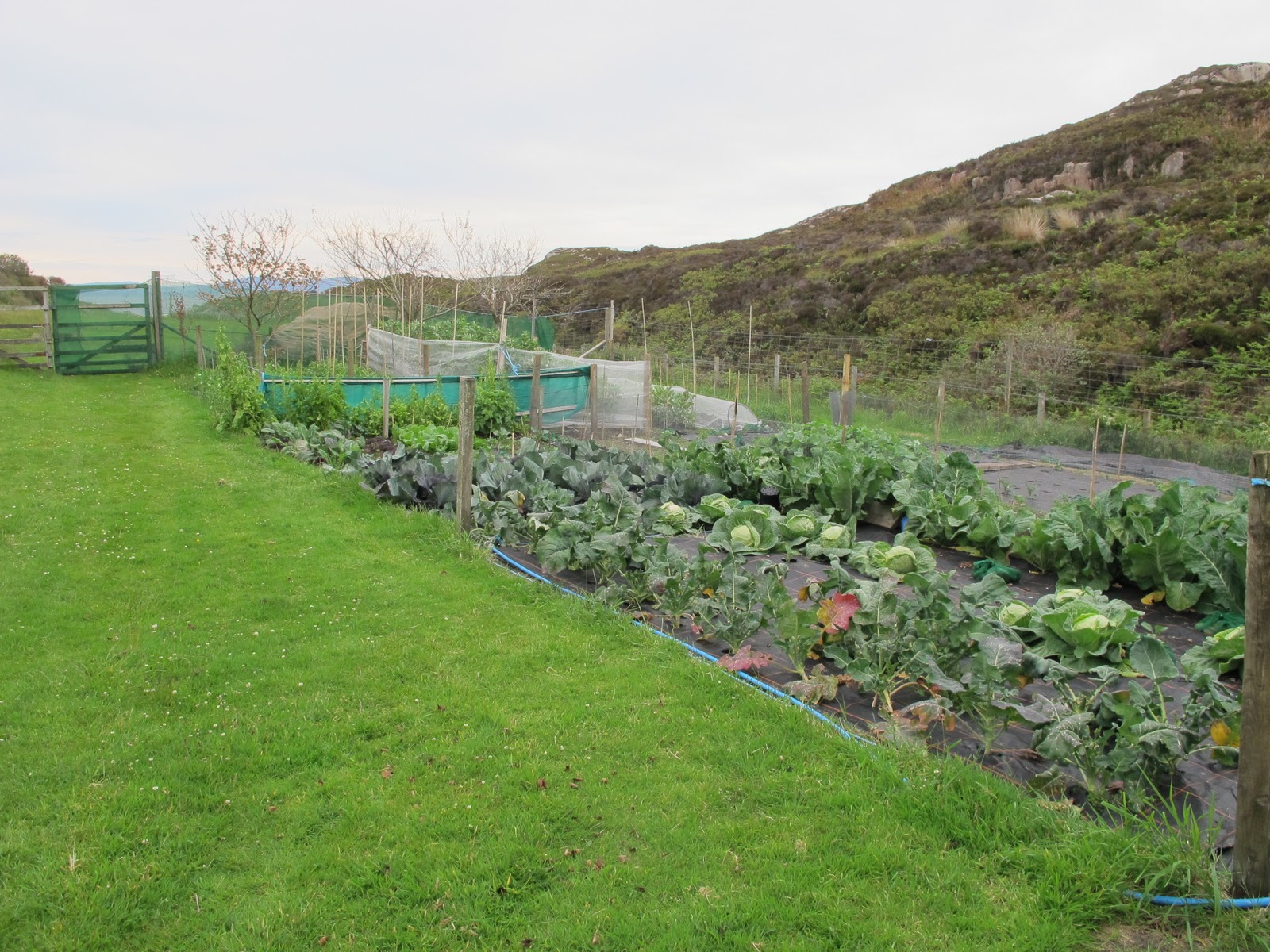
I spent two weeks at Dail an Inbhire, small a farm in Scotland with with the kind and knowledgable veteran farmers, Rosie and Nigel. The farm is extremely remote. It is located in a fairly harsh environment, near the tip of a windswept peninsula on the Isle of Mull. In an environment like this good organization is key to maintaining a farm ecosystem. Nigel and Rosie manage the farm based on concepts drawn from the "Rural Stewardship Scheme, which has resulted in an increase of natural flora and fauna, suited to the specific mirco-niches they have worked to create around their farm. The croft (garden) was situated at the bottom of a small ravine, and hardy fruit trees such as rhubarb, were tucked away in just about every wind blocked nook on the property. 22 hectares of grazing land support a small flock of grazing sheep and poultry. Two windmills provide almost all electricity, and the garden, chickens and sheep provide a large proportion the food. At Dail an Inbhire, I spent a good deal of time in the garden, harvesting, weeding, transplanting, and alleviating an aphid breakout. I also spent a few days helping Nigel and Brendon (R & N's son) frame up a roof on a neighbor's house. Working here was a wonderful experience! Nigel and Rosie had so much to teach. I only wish I could have stayed longer!

Friday, June 3, 2011

Un Altra Saluti


I am getting tired of goodbyes. On to another month and another adventure. Tanti Saluti Christiane, Ruben, Bruno, and all of the other fantastic people I have met in Cagli. Grazie mille per tutti! It's been another unforgettable experience!

Wednesday, June 1, 2011

Facciendo Pane / Lavorare in il Bosco / e piu


I've made several entries about my free time, so here's one about the work. Forgive my disjointed topic jumping...

During this time of the year, most of the work in the winter gardens is weeding. We joke that we spend more time and energy uprooting unwated plants, than encouraging wanted ones to take root. I guess, this is the reality of mechanical weed managment. Every 4 or 5 days we make a pass through the garden with our zappas chopping off the weeds and loosening the soil. We follow this up immediately with water. It's a good system because the water soaks in to the loosened soil nicely (here there is a lot of clay), and the freshly chopped weeds drink less, leaving more for the veggies. Currently, we are also transplanting plants and seeding the summer garden. There are about 160 pomodori (tomatos), as well as peperoni (peppers), zuccini, melanzana (eggplant), and several types of beans. I don't have a picture of myself working in the garden, but here is one of Jes. A surprise change in travel plans landed here her with me for the last week at the farm.

Coral fencing in Italy is quite different than in the US. It's janky. You could call it okie-rigged, if only we used duct tape. We use a heavey iron rod to dig out a post hole. The posts are just branches from the woods, all different lengthes and diameters, some of them very crooked. To connect them, one or two wires does the job, maybe even string in some places. The gates are where things get really creative. I've seen everything from pallates tied with rope to box springs serving this purpose. I guess if it works, it works!

Every year Ruben thins out their woodland. The trick is to have enough sun on the forest floor for young trees to grow, but not cut faster than the trees are replaced. This optimizes the wood production, and keeps the forest in a nice healthy state. They use some of the wood for their own firewood, and sell the rest. This year ruben felled about 40 trees. We have to load all of this wood and bring it the house. It's heavy work, as some of the trunks are around 2 feet wide. But the forest makes a nice office. I can't complain! When we work in the forest we are usually joined by Ruben's friend Moreno, an avid backpacker, and fellow english speaker. Today was his last day of work. Tomorrow he flies to spain to spend a month packing on the Camino de Santiago, a 1,000km trail through the heart of Spain.

The other day we took about 65 kilos of wheat berries to the mill to be ground. 20 years ago this was a comon practice. Now, there is only one mill in the vicinity that will grind small quantities of flour for individual farms. After an hour drive, with several stops to ask directions, we arrived. It was an interesting little place. Full of noisy machinery, it was sort of rimenicent of a small print shop. Instead of smelling of ink and acetone, it smelled like bread! I've read a bit about the process of harvesting wheat berries and grinding them , how to get different types of flour, ect, so it was facinating for me to see the process in person. Chris has already made pizza dough with the fresh ground flour. È buonisimo! Yesterday we made a starter for the yeast, and today we made 20 loaves in the woodfire oven.