Thursday, November 24, 2011
¿Donde voy?
View Larger Map
¡Aqui!
The farm I'll be staying at for my first three months is called "Granja Valle Pintado". It is located 6 kilometers outside of the lively artisan town of El Bolsón, Argentina among the Patagonian Andean mountains on the 42nd latitude, and along the banks of the Río Azul river. The farm is on 8 hectares (20 acres) of land that were bought as a community living project in 2003 by a group consisting of Argentines, Chileans, Americans, and Canadians. Currently Alex Edleson, farmer, founder and my contact, is one of several residents on the land. They work the land through manual-style, low-till, organic agricultural practices, inspired by the principles of Steiner’s biodynamics, the natural farming of Fukuoka, and permaculture.
The farm organism of today has an important social responsibility as not only an economic nexus, but also an educational and therapeutic one, as it is an entity that manifests and connects us to the active forces and processes of nature. The Granja Valle Pintado community seeks to apply ancient wisdom to the necessities and contributions of the modern context, cultivating good food while increasing the health of the land, farmer, and local community.
Life on the farm is simple and rustic. They do not have electricity and heating is mostly from firewood. The farm is still in its formative stages. For the last couple of years on 1 hectare (2.5 acres) they have been growing small-scale grains, vegetables, fruit and pasture, saving seed, raising chickens, geese, bees, a milking cow and a horse that helps with farm work and transport. The farm is pioneering the community-supported agriculture model (CSA) in Argentina, which they call “agricultura asociativa”. They believe it is not enough to practice cultivating by organic methods, without also cultivating a socio-economic model that will sustain such farms. This means liberating agriculture from malicious market pressures by empowering local community economics. The farm is sustained by a group of El Bolsòn townspeople who financially and ethically support the Granja Valle Pintado. The harvest is divided into boxes and delivered weekly to share among farm’s member families, along with a range of other products we make like cheese, yoghurt, beer, dried herbs, jams, and chutneys.
The farm has a well developed infrastructure, including two houses (I think) and a central community kitchen. Structures were built using natural building methods like straw-bale, cob, adobe, and rustic carpentry.
I'm leaving tomorrow, and will get to the farm via Buenos Aires and San Carlos De Bariloche. I am so STOKED! Happy turkey day everyone!

Thursday, November 10, 2011
Español Argentina
I'm headed to Argentina in 2 weeks, and I'm getting pretty darn excited! I've already discovered a pretty awesome Argentinian band! Onda Vaga (Wandering Wave) is a group from Buenos Aires. I bought their album and have been using it as a study aid. It's been a great way to get exposed to genuine Argentinian spanish!
- tù = vos
- vos = ustedes
- ll sounds like "jzhe"
- j is pronounced "kch"
- "y" at the beginning of a syllable makes a "sh" sound
I also read that the dialect in Patagonian-Argentina (especially the slang) is heavily influenced by Italian.
¡Qué suerte! ... or is it ¿Què fortuna?
Friday, July 1, 2011
Dail an Inbhire

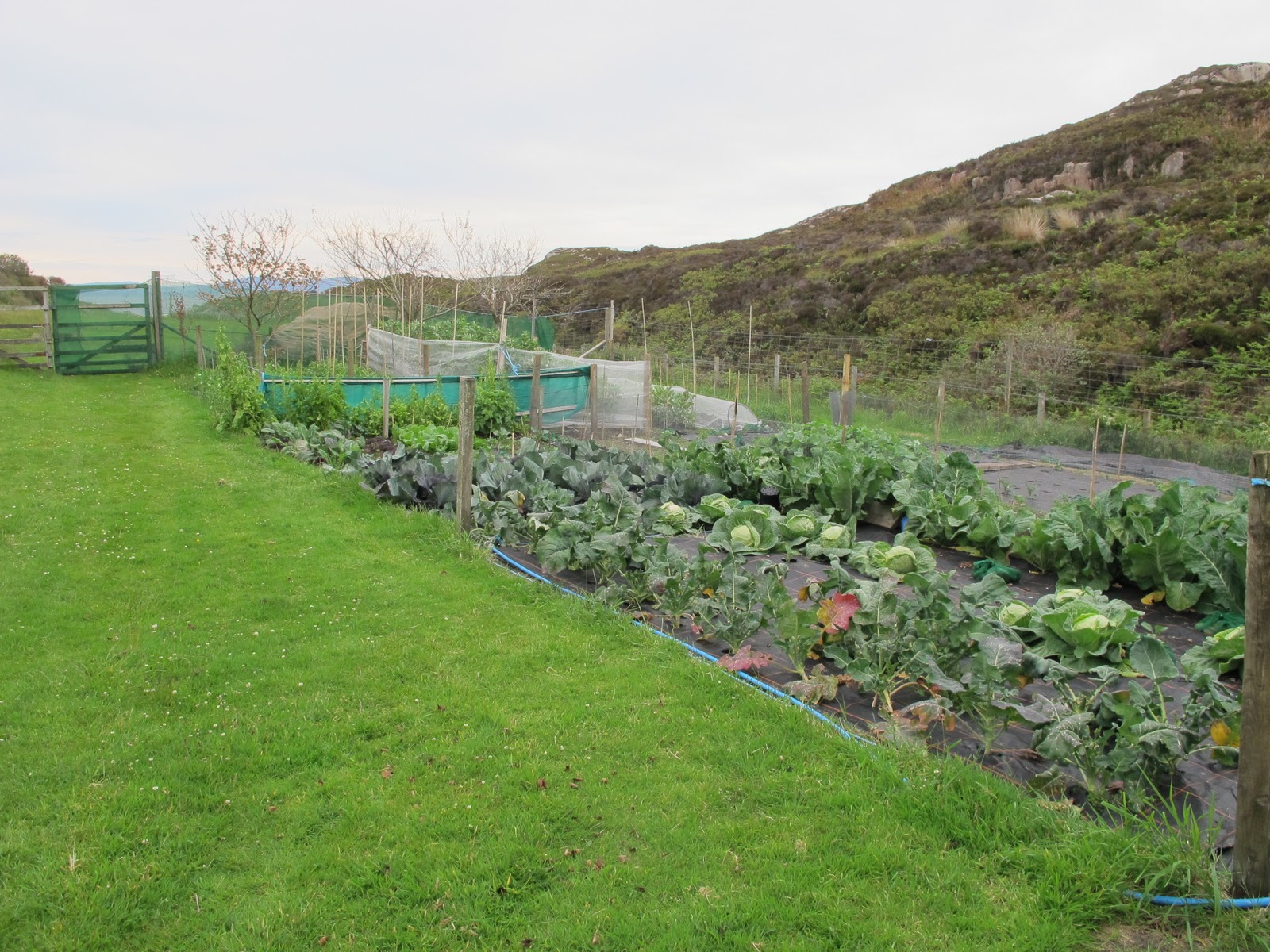


I spent two weeks at Dail an Inbhire, small a farm in Scotland with with the kind and knowledgable veteran farmers, Rosie and Nigel. The farm is extremely remote. It is located in a fairly harsh environment, near the tip of a windswept peninsula on the Isle of Mull. In an environment like this good organization is key to maintaining a farm ecosystem. Nigel and Rosie manage the farm based on concepts drawn from the "Rural Stewardship Scheme, which has resulted in an increase of natural flora and fauna, suited to the specific mirco-niches they have worked to create around their farm. The croft (garden) was situated at the bottom of a small ravine, and hardy fruit trees such as rhubarb, were tucked away in just about every wind blocked nook on the property. 22 hectares of grazing land support a small flock of grazing sheep and poultry. Two windmills provide almost all electricity, and the garden, chickens and sheep provide a large proportion the food. At Dail an Inbhire, I spent a good deal of time in the garden, harvesting, weeding, transplanting, and alleviating an aphid breakout. I also spent a few days helping Nigel and Brendon (R & N's son) frame up a roof on a neighbor's house. Working here was a wonderful experience! Nigel and Rosie had so much to teach. I only wish I could have stayed longer!
Friday, June 3, 2011
Un Altra Saluti


I am getting tired of goodbyes. On to another month and another adventure. Tanti Saluti Christiane, Ruben, Bruno, and all of the other fantastic people I have met in Cagli. Grazie mille per tutti! It's been another unforgettable experience!
Wednesday, June 1, 2011
Facciendo Pane / Lavorare in il Bosco / e piu


I've made several entries about my free time, so here's one about the work. Forgive my disjointed topic jumping...
During this time of the year, most of the work in the winter gardens is weeding. We joke that we spend more time and energy uprooting unwated plants, than encouraging wanted ones to take root. I guess, this is the reality of mechanical weed managment. Every 4 or 5 days we make a pass through the garden with our zappas chopping off the weeds and loosening the soil. We follow this up immediately with water. It's a good system because the water soaks in to the loosened soil nicely (here there is a lot of clay), and the freshly chopped weeds drink less, leaving more for the veggies. Currently, we are also transplanting plants and seeding the summer garden. There are about 160 pomodori (tomatos), as well as peperoni (peppers), zuccini, melanzana (eggplant), and several types of beans. I don't have a picture of myself working in the garden, but here is one of Jes. A surprise change in travel plans landed here her with me for the last week at the farm.
Coral fencing in Italy is quite different than in the US. It's janky. You could call it okie-rigged, if only we used duct tape. We use a heavey iron rod to dig out a post hole. The posts are just branches from the woods, all different lengthes and diameters, some of them very crooked. To connect them, one or two wires does the job, maybe even string in some places. The gates are where things get really creative. I've seen everything from pallates tied with rope to box springs serving this purpose. I guess if it works, it works!
Every year Ruben thins out their woodland. The trick is to have enough sun on the forest floor for young trees to grow, but not cut faster than the trees are replaced. This optimizes the wood production, and keeps the forest in a nice healthy state. They use some of the wood for their own firewood, and sell the rest. This year ruben felled about 40 trees. We have to load all of this wood and bring it the house. It's heavy work, as some of the trunks are around 2 feet wide. But the forest makes a nice office. I can't complain! When we work in the forest we are usually joined by Ruben's friend Moreno, an avid backpacker, and fellow english speaker. Today was his last day of work. Tomorrow he flies to spain to spend a month packing on the Camino de Santiago, a 1,000km trail through the heart of Spain.
The other day we took about 65 kilos of wheat berries to the mill to be ground. 20 years ago this was a comon practice. Now, there is only one mill in the vicinity that will grind small quantities of flour for individual farms. After an hour drive, with several stops to ask directions, we arrived. It was an interesting little place. Full of noisy machinery, it was sort of rimenicent of a small print shop. Instead of smelling of ink and acetone, it smelled like bread! I've read a bit about the process of harvesting wheat berries and grinding them , how to get different types of flour, ect, so it was facinating for me to see the process in person. Chris has already made pizza dough with the fresh ground flour. È buonisimo! Yesterday we made a starter for the yeast, and today we made 20 loaves in the woodfire oven.
Friday, May 20, 2011
Mt Petrano


Cagli is a the base of a plateau called Mt Petrano. It's a very unique place. The drive to the top takes about 20 minutes from Cagli. You wind through dense forest getting occasional wide views of the country side below. Nearing the top, the forest gives way to grassland. During the week, you will see many locals mushroom hunting around it's edges. This area is famous for its fungi and truffles.
Jes and I drove up to the top saturday evening, hoping it wouldn't be to crowded. We ended up being the only people on the mountain! t's an incredible place. The plateau is at least 1 km wide and maybe 2 or 3 long. Gentle rolling hills covered with wildflowers stretch out in every direction. The grass is trimmed short in the early spring by grazing cattle, so now it is like an enormous lawn. To the east there are incredible views of the Umbrian Alps, and to the west the Marche campagna and the Adriatic Sea in the distance. So, beautiful! In the winter, Chris says it is all covered in snow. I have never seen anywhere else like this. Really, the photos don't begin to do it justice!
Wednesday, May 18, 2011
Zuppa di Herba


On this farm, my work has been very diverse. In a little over a week, I've done a little bit of everything; weeding, watering, harvesting, gathering herbs, preparing new land to be planted, making soap, installing coral fencing. One thing I have found particularly interesting is Chris's solution to pests: herb soup.
Here are the ingredients:
- Ortica (stinging nettle, this is the most important ingredient)
- Farfara
- Equineto (horse tail)
- Cousolida Maggiore (comfrey)
- Acchilea (yarrow)
Mix with water, and let it sit in the sun for around a month. It becomes quite a stew! The soup smells like a mixture of fresh cut grass and barnyard yuck, and as you can see below, it looks delicious. The bee's love it, but I keep it at a distance when possible.
When applied to the leaves of plants, whether it be garden veggies, herbs or a wild cherry tree, this concoction is quite effective at deterring pests, and protects against a myriad of diseases. Being made of decaying plant matter, it also makes a great soil amendment. You could drink it if you really wanted to! But trust me, you wouldn't want to...
Either way, I am definitely going to be trying this at home.
Subscribe to:
Posts (Atom)